As the holy month of Ramadan approaches its end, Muslims around the world have started preparing for their yearly celebrations of Eid-ul-Fitr. This Eid marks the end of Ramadan and the beginning of the new moon sighting of Shawaal.
Many of the Muslims like to celebrate by dressing up and wearing their best clothes on Eid day and going out to meet friends and relatives, looking and smelling good. Muslims begin this occasion with the Eid prayers in the morning (see also: Prayer Times App). Eid is a well-known tradition from Islamic history and is also indicated by Sunnah. Prophet Muhammad (SAW) was known to have worn his best cloak on Eid.
Every Culture has its own style and sense of dressing which also may vary from person to person according to their likeness. For instance in Pakistan men & women wear their traditional Shalwaar Kameez. In Indonesia, women wear their dress (Kebaya) and hijab (Kerudung). Whereas in the West, Muslims are from diverse cultural backgrounds and there isn’t a common style, people often wear an outfit from another Muslim culture other than their own.
Let’s have a look at how Muslims from different parts of the world dress up on Eid day.
1- Women in Palestine wearing their traditional dress with intricate red thread embroidery and decorated with small mirrors. The dress is known as “Thube”.
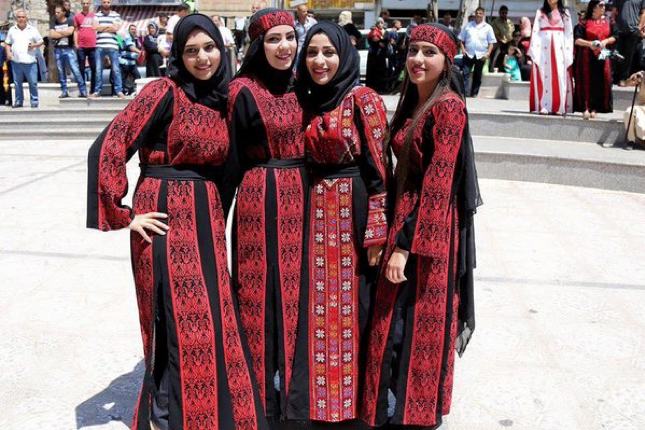
2- Muslim kids in Kosovo taking part in a prayer during Eid celebration wearing black waistcoats decorated with gold threads and bow ties.
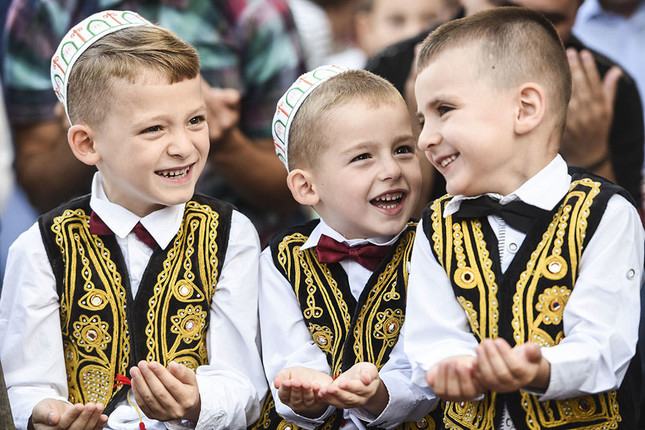
3 – The man is wearing a traditional long dress from Ghana.
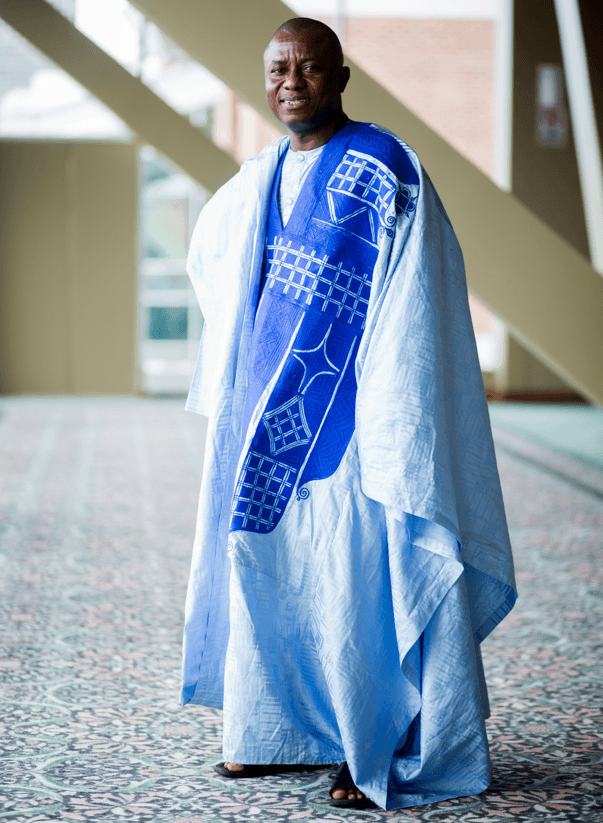
4- Malaysian women greeting each other on Eid-ul-Fitr adorned in bright colored headscarves (hijab) and long gowns.
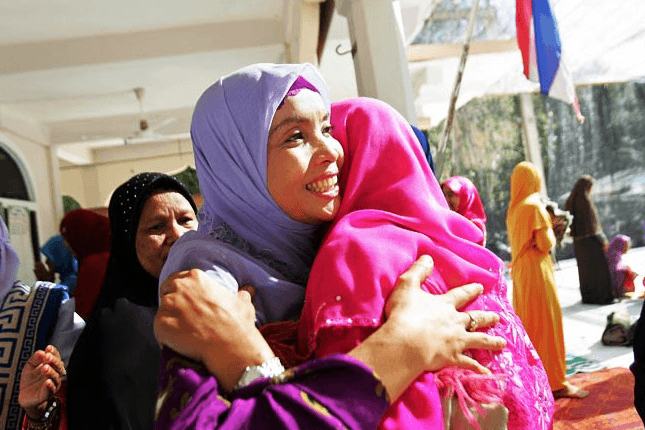
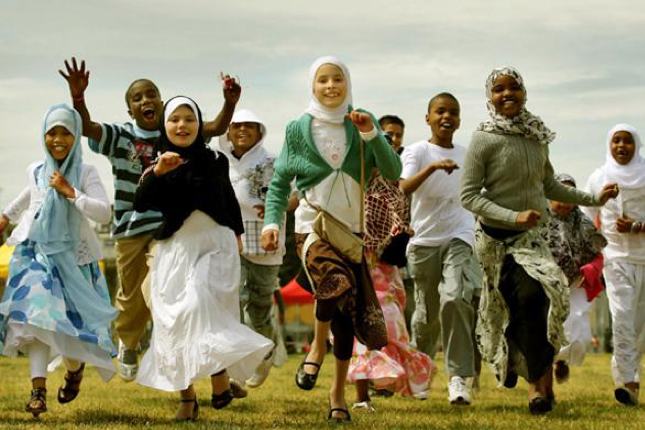
5- Young Muslims from diverse Islamic cultures celebrate Eid-ul-Fitr in Australia dressed as they please.
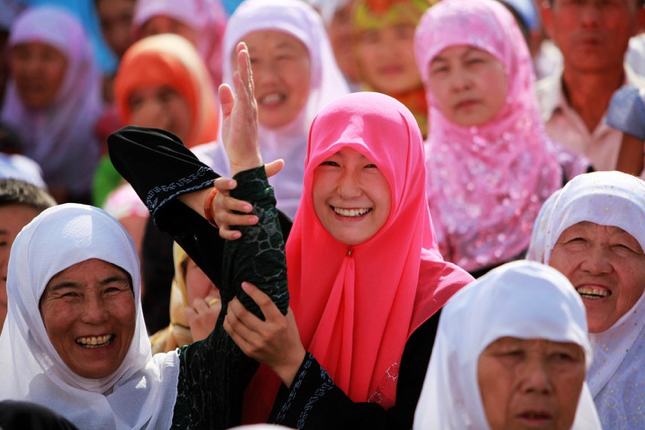
6- Women in China celebrate Eid-ul-Fitr in the traditional Muslim attire i.e. a headscarf (hijab) and a cloak.
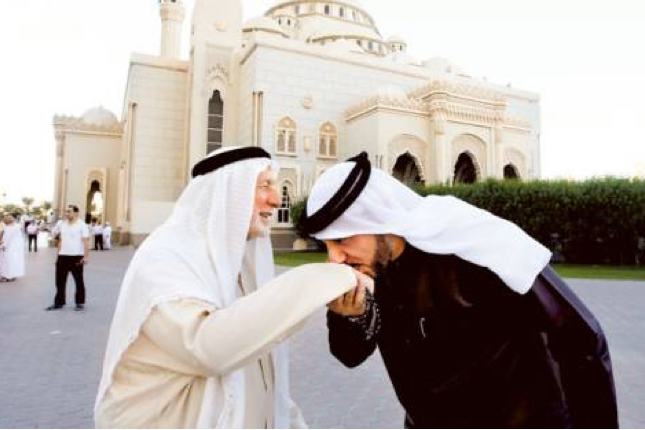
7- Muslims in U.A.E. greet each other on Eid-ul-Fitr day. Men are wearing their traditional headgear (keffiyeh) and a cloak (thobe). The dress is uniquely common and worn by the men in the Arab countries.
8- Kenyan Muslim men snap a group selfie on the day of Eid-ul-Fitr. Both the adults and kids wear a traditional headset and a cloak (Thobe). The color of the headset is usually in alignment with the color of the clothes.

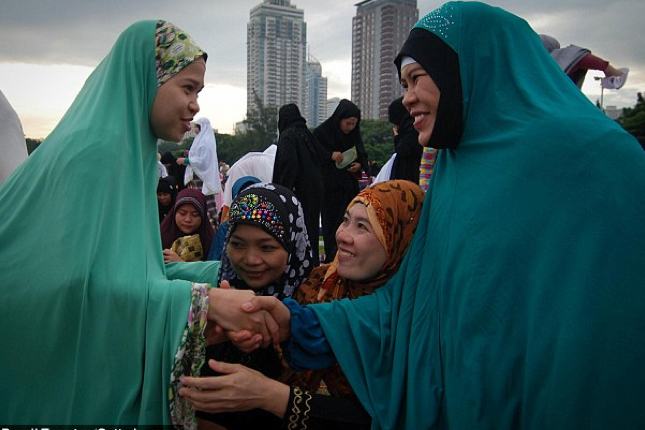
9- Muslim Women in the Philippines wear colorful headscarves and long robes.
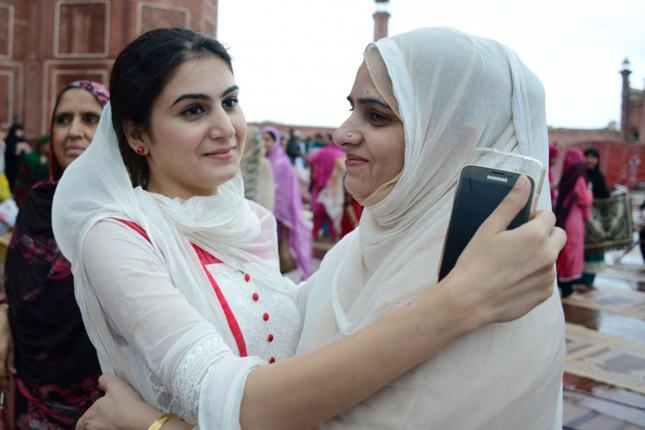
10- Women in Pakistan dress up for Eid-ul-Fitr in their traditional clothes i.e. shalwar kameez. The outfits are usually embellished with intricate designs or embroidery in other cases.
Not able to find your cultural dress here? Send us your Eid pictures on Facebook and get featured on our Facebook page and blog this Eid!