Prayer Times in Afghanistan
Prayer Times
Top Cities in Afghanistan
8 Shaban, 1447 Hijri

All Cities and Towns in Afghanistan
All Cities and Towns in Afghanistan
Oruzgan
N:33.926666, E:66.4225
Bamian
N:34.383335, E:67.11667
Kondoz
N:36.81278, E:68.8625
Sar-e Pol
N:35.966667, E:66.55
Jowzjan
N:37.045, E:66.007774
Jowzjan
N:37.045, E:66.007774
Ghazni
N:33.4725, E:67.486664
Ghazni
N:33.830555, E:67.609726
Oruzgan
N:33.421112, E:66.054726
Helmand
N:31.123888, E:64.19889
Samangan
N:36.270832, E:68.029724
Badakhshan
N:37.06139, E:70.49139
Ghazni
N:33.118057, E:67.45917
Baghlan
N:35.88, E:69.08278
Kondoz
N:36.69611, E:68.992226
Baghlan
N:35.93028, E:69.10389
Sar-e Pol
N:35.458332, E:66.437225
Sar-e Pol
N:35.920555, E:67.02944
Baghlan
N:35.88, E:69.08278
Kondoz
N:36.69611, E:68.992226
Faryab
N:36.415, E:64.88639
Faryab
N:36.415, E:64.88639
Faryab
N:35.386944, E:64.74
Oruzgan
N:34.310276, E:65.483055
Faryab
N:35.640278, E:65.27861
Nimruz
N:30.144444, E:62.46
Jowzjan
N:35.421112, E:66.52389
Kondoz
N:36.670277, E:68.875
Kondoz
N:36.670277, E:68.875
Badghis
N:35.101944, E:64.89555
Faryab
N:35.269165, E:64.95306
Oruzgan
N:34.18111, E:65.490555
Ghowr
N:33.396946, E:65.02639
Baghlan
N:36.190556, E:69.30222
Faryab
N:35.246666, E:64.565
Faryab
N:35.273613, E:64.79583
Ghowr
N:34.136944, E:65.3725
Ghowr
N:33.396946, E:65.02639
Badghis
N:34.75, E:63.266666
Jowzjan
N:37.412777, E:66.047226
Farah
N:32.470554, E:62.218887
Badakhshan
N:36.499443, E:71.75056
Ghowr
N:33.467777, E:64.28778
Ghazni
N:33.238888, E:67.45361
Baghlan
N:36.09722, E:68.99306
Farah
N:31.532778, E:61.469444
Kondoz
N:36.752777, E:68.94
Farah
N:31.532778, E:61.469444
Samangan
N:36.266388, E:67.955
Kondoz
N:36.752777, E:68.94
Kabol
N:34.773888, E:69.12028
Badakhshan
N:37.149166, E:70.19361
Kondoz
N:36.70861, E:68.95417
Bamian
N:34.611668, E:67.01028
News from IslamicFinder



Sunrise
Shurooq is the time of sunrise, the time when the upper limb of the sun just starts to appear above the horizon. This marks the end time for Fajr (morning) prayer.
Qiyam
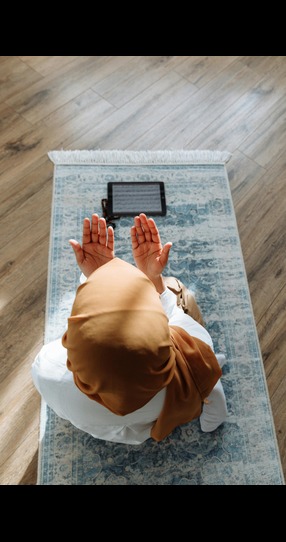
The term Qiyam-ul-layl, in the most literal sense, means to stand during the night. It is a voluntary prayer which is offered between the time of Ishaa prayer and the Fajr prayer (before dawn). But the most preferred time is before sunrise, in the last third of the night.For more information, read our article on qiyam.
The difference between Standard and Hanafi (Juristic Methods)
The only difference is in the Asr prayer. In the standard method (which is used by Imamas Shafii, Hanbali, and Maliki) the Asr prayer time starts when the shadow of an object is equivalent to its height, whereas in the Hanafi method the Asr prayer time starts when the shadow of an object is twice its height.
Daylight Saving Time
Daylight Saving Time (DST) is the practice of setting the clocks forward one hour from standard time during the summer months, and back again in the fall, in order to make better use of natural strong daylight. IslamicFinder Website is adjusting daylight savings automatically according to your location.
Latitude and Longitude
To calculate the prayer times for a given location, we need to know the latitude and the longitude of your current city or town, along with the local timezone for that location. IslamicFinder is detecting longitude, latitude and timezone of your current city or town automatically. If you face any difference in prayer timings according to your current location then please confirm these latitude and longitude first. You can also use our 'Change Settings' option to change latitude, longitude and timezone of your current location. You can find this option of 'Change Settings' from Top Search bar setting link on right side or from today prayer times card.

Contact Us